
Bookbirds
SHARES
READS
The idea that anyone can write is to a large degree, absolutely false. One could argue, yes, everyone can write in the way that everyone can cook, however, not everyone is Gordan Ramsey. Putting words in a stringed format on paper in its essence is possible, but there is a craft to it, and unfortunately. Without the harnessing of the craft, your writing falls flat.
The question is how do you clock the errors in your writing, so it can feel more alive?
We have collected the 7 most common writing mistakes new writers make that can stop you from writing flat. Consider these additional tips for your first ever writing project. Consider these additional tips for your first ever writing project.
Once upon a time. The alarm rings. Your protagonist opens their eyes. They get dressed, eat breakfast, and begin the day that will eventually change everything.
There is nothing technically wrong with any of these openings. The problem is that they are outdated and overdone.
A strong opening does not have to begin with an explosion, murder, or dramatic revelation. It simply needs to give the reader a reason to continue.Try something new and open your writing from an angle otherwise unorthodox. That is what makes you as a writer interesting. No one has read anything like you before.
Instead of asking, “How should this story begin?”, try asking:
“What is the most interesting door into this story?”
Sometimes the best first chapter begins five minutes later than you originally planned.
You know your fictional world better than anyone else.
You know where your protagonist grew up, what happened to their parents, why two kingdoms have hated each other for 200 years, how the magic system works, and what everyone had for breakfast three Tuesdays ago.
Your reader does not need all of that information.
Large blocks of exposition slow a story because nothing is happening while the reader is receiving them. Instead, allow information to flow naturally at times that are more telling of the story and its world.
What keeps your reader engaged is the space between the lines, where the reader can interpret and question your work. Your reader should feel trusted enough to come to conclusions on their own. Readers love writers who have faith in them.
If a character refuses to enter a particular room, you do not necessarily need to explain why immediately. Let the reader wonder. Give them enough information to understand the moment without removing every question from it.
Good storytelling creates a conversation between the writer and the reader. Trust your reader enough to participate.
The principle commonly known as Chekhov’s gun suggests that significant elements introduced into a story should eventually serve a purpose.
That does not mean every coffee cup, tree, or pair of shoes must become a plot twist.
It means that when you deliberately draw the reader’s attention to something, they naturally expect it to matter.
If you spend three paragraphs describing a mysterious locked drawer and nobody opens it, refers to it, or thinks about it again, the reader may wonder why it was there. Details can serve many purposes. They may advance the plot, reveal character, establish conflict, foreshadow, or build your world.
During revision, look at the details you have emphasized and ask:
“What is this doing for the story?”
If the answer is “nothing,” either give it a job or consider removing it.
If I wrote this article and spent a majority of the time bragging about how expansive my vocabulary is, you would not have even reached this point in the article. That is because you would no longer care about my work or me. Word choice is extremely important in order to connect with your audience and their expectations from your work. So grab a thesaurus and linger over your choice of words for longer than you currently do, and you will never write flat again. Good writing is not about using the longest word available.
It is about finding the right word.
If every sentence sounds as though it has been dragged through a thesaurus, the reader begins noticing the writing instead of experiencing the story.
Compare:
“She was extremely angry.” with: “She crushed the paper cup in her hand.”
Do not ask, “What is a smarter word for this?” Instead ask, “What is the most accurate word for this moment?”
Clear isn’t boring. Simple does not mean unsophisticated. Precision is what makes prose powerful.
Imagine beginning a paragraph inside Anna’s thoughts, moving into David’s fears two sentences later, and then explaining what Sarah secretly thinks about both of them.
The writer may know what everyone is thinking. The reader usually does not need to.
A controlled point of view creates intimacy because readers understand whose experience they are inhabiting.
Research found that narrative perspective influenced aspects of the reading experience; first person versions generated greater attention and emotional engagement with the protagonist than third person versions in that experiment. The study does not mean first person is always superior, but it demonstrates that point of view choices can meaningfully affect how a reader experiences a story.
There has never been a need to jump into the minds of every character you create. The beauty of writing exists in delving deep into the minds of simply one of the characters and building an immersive world from their perspective. Their perception of the thoughts of the supporting characters is ultimately more interesting than flatly being told what everyone thinks. The mystery keeps the reader alive!
Writers naturally think about publishing. How much can I earn from this book? Will this genre sell? Should I write what is trending? Could this become a series?
The problem begins when commercial considerations become more important than the story itself.
Readers are remarkably good at sensing when a book feels manufactured rather than meant.
Market awareness can help you position a book, identify its audience, and understand its genre. It should not replace curiosity, conviction, or emotional investment.
Before asking “What can this book give me?”, ask:
“Why do I need to write this book?”
You do not need a life changing philosophical answer.
You simply need something that makes you care enough to keep going when the writing becomes difficult.
This does not mean every novel should secretly be your autobiography.
Fantasy writers do not need to fight dragons. Crime writers do not need to solve murders. Science fiction writers do not need to visit another galaxy. However, the emotions underneath those experiences should feel recognizable.
Grief. Jealousy. Embarrassment. Ambition. Loneliness. Relief. Desire. Fear.
Those are things writers can observe and understand.
Research on fiction has repeatedly explored the experience of becoming mentally and emotionally absorbed in a story. One experimental study found that fiction affected empathy over time particularly when readers became emotionally transported into the narrative.
That is one reason emotional specificity matters.
Instead of writing:
“He was heartbroken.”
Ask yourself what heartbreak actually does to this particular person. Maybe he keeps cooking dinner for two. Maybe she still lowers the television volume because her mother used to complain about it. Maybe he deletes a phone number and then immediately restores it. The emotion becomes believable when it becomes specific. Use your own experiences not necessarily as plots, but as emotional reference material.
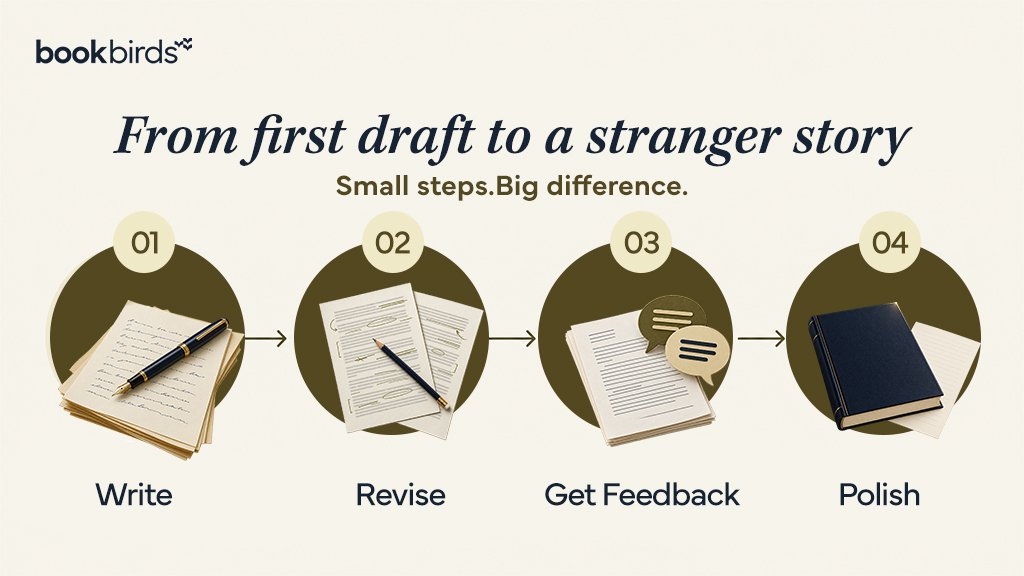
Ultimately the best way to avoid flat writing is to keep writing. Write every day. Eventually, you’ll begin to see it come to life, but you have to write for that to be a reality. Your first draft only needs to give you something to work with. The second, third, and fourth drafts are where you begin noticing the difference between what you intended to write and what actually reached the page. Keep writing. Keep reading. Keep revisiting your work with slightly better eyes than you had the last time.
Flat writing is not a permanent condition. Flat writing is just a draft.
When the purpose of your writing is to achieve an impersonal goal, the writing cannot be expected to be personal. The best work is that which is authentically yours, even if the metaphors aren’t sparkling and the language isn’t Orwellian or Dickensian in nature.
This article isn’t meant to scare you from writing by giving you a list of do’s and don’ts. Ultimately, there is just one ‘do’: write. Write until the rivers of your mind run dry and all you can do is edit. Edit until it is up to the mark you have set for yourself and then edit a little more. First create the art, then stress about it being good.
Writing often feels flat when scenes lack tension, characters react generically, exposition interrupts the story, or the prose tells readers exactly what to feel instead of allowing them to experience it.
Give every scene a purpose, introduce unanswered questions, use specific sensory and emotional details, control your point of view, and remove information the reader does not yet need.
Reveal background information gradually through dialogue, action, conflict, setting, and character decisions. Ask what the reader needs to know right now, rather than everything you know about the story.
Chekhov’s gun is a storytelling principle suggesting that elements given noticeable importance should eventually contribute to the narrative. It is essentially a reminder to avoid emphasizing details that have no purpose.
Clear and precise vocabulary is usually more effective than complicated vocabulary used only to sound sophisticated. The best word is the one that communicates the exact meaning, tone, and image you need.
Head-hopping happens when a story moves abruptly between different characters’ internal thoughts or perspectives, often within the same scene, without a clear structural reason.
Focus on specific behavior rather than emotional labels. Instead of telling readers that someone is nervous, show what nervousness causes that particular character to notice, think, say, or do.
Writing regularly can help you build fluency and develop your voice, but consistency matters more than maintaining a perfect daily streak. A sustainable writing routine is usually more useful than forcing yourself to write every day and burning out.
Ask what changes because the scene exists. It should ideally advance the plot, reveal character, develop conflict, establish necessary information, deepen the setting, or reinforce an important theme.
Fresh insights and cutting-edge research on software development teams and the ever-evolving world of tech talent. Stay ahead of the curve with the latest trends, tips, and strategies shaping the future of your workforce.